
FrameWork 5/26
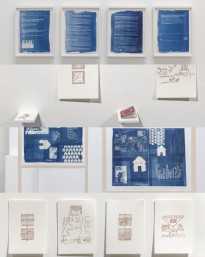
Aaisha Salman on Zinnia Naqvi and Shahana Rajani
One is, of course, born with frames.
sociological table, and in the light of sociology, unmarried “alive otherwise” women appeared quitedetrimental to the familial unit. In the light of literature, it was a different story. They became women of possibility, and Du Bois learnt to acknowledge that. Du Bois became a different reader
over time. ...
FrameWork 3/26
Auden Tura on Gareth Long
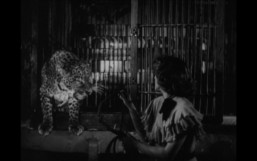
“I Can’t Give You Anything but Love, Baby” remains one of the most recorded pop songs of all time since its release in 1928. The majority of these recordings took place before 1950, and, as such, it features in a number of films produced during this period, including Marlene Dietrich’s rendition in Seven Sinners (1944), the wartime musical Jam Session (1944), and Howard Hawks’ screwball comedy Bringing Up Baby (1938). Not incidentally, these decades were also the prime of the classic Hollywood film, a period of strict adherence to generic conventions and the star system. ...
FrameWork 2/26
Zahra Komeylian on Patrick Howlett
A moon orbits the sky, over my head
And so does a second moon, Sol
The second moon carries a small house.
Which only becomes apparent as it descends onto the hedge bush.
...
FrameWork 12/25
Stevie Manning on Jeremy Laing
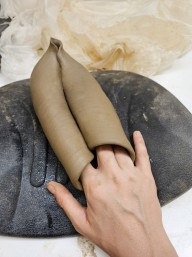
Body Thought
Difficult objects
Crawl out of themselves
Topple over & pile back up
Arranging is faggier than assembling
Leaving a little accidental shit
Unexpected pregnancies are
Sent back from Europe
Deadstock ...

FrameWork 11/25
Brendan Flanagan on Scott Lyall
Neither Math nor Feeling:
I.
Up close, the surface becomes too present. What looked from a distance like a red haze turns crisp and unyielding: flat ink layered on aluminum, a grid like the world’s most exacting tapestry, its warp and weft reveal no strain of materiality. There is no brushstroke, no friction. Step back and the grid dissolves again into atmosphere. Move forward and precision returns. The piece organizes a rhythm: approach, calibrate, recede, recalibrate. ...
FrameWork 9/25
Stella McCaig on Yan Wen Chang
What a cool world we live in, one with beat-em-up video games and free private-browsing porn, one with love and landfills. This world has me. It has me lying back on my shitty, stained couch, exploring the entire city of LA with my fingertips - cosplaying a violently bricked man on route to steal cars, cat-call girls, and shoot any Cop that comes within shot range. I do this relentlessly, grotesquely, deplorably. I drink Diet Pepsi wearing only underwear. My nails are always gunpowder green with red tips, my hair a knotted mass, and ...

FrameWork 6/25
Claire Geddes Bailey on
Rhonda Weppler and Trevor Mahovsky
3 Compositions after Passing Resemblance
FrameWork 4/25
Derek Coulombe on Zin Taylor
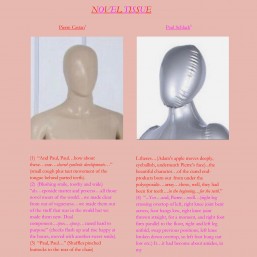
- “And Paul, Paul…how about these…our…shared synthetic developments…” (small cough plus taut movement of the tongue behind parted teeth).
- (Blushing smile, toothy and wide) “ah…epoxide matter and process…all those novel meats of the world…we made clear from out of vagueness…we made them out of the stuff that was in the world but we made them new. Dual component…epox…epoxy…cured hard to purpose” (cheeks flush up and rise happy at the bones, moved with another sweet smile) ...
FrameWork 3/25
Yan Wen Chang on Sandra Meigs
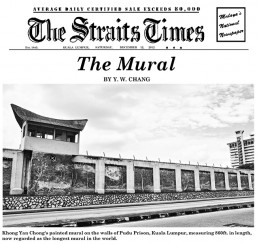
Hardly anything has ever been mentioned of the former inmate who painted the mural of the now demolished Pudu Prison.
Yesterday, the walls that once held the regal paintings of vivid scenes from an ex-convict's captive imagination of jungles and streams came tumbling down to make way for a wider road. ...
FrameWork 2/25
Colin Miner on Beckon
Wax, wick, flame.
Materials are gathered. Wax melts to form the base. Heated and warmed to slowly flow and fill. Surrounding the wick. Nice and snug. Air is displaced in response. Upwards towards verticality. Wait. Time to rest. A coagulation is occurring. We hope you feel it. A growing solidity. Then focused. A flame. Something so soft. It burns.
FrameWork 12/24
Claire Greenshaw on Ian Carr-Harris
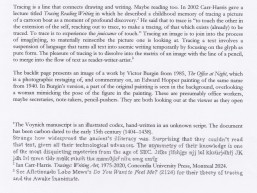
Pre-collapse cultural life:
Art Writing, “Toronto” 2020s
Note on this document:
This is a copy of the original paper from 2024, with updated footnotes from transcribe Xerox in 2096, and added commentary from transcribe Shanzhai at the time of this repro in 2168.
The remnants of the original are in the ancient section of the Reading Hand, in the fonds of Starter 1.
FrameWork 11/24
Simi Kang on Beth Stuart
Dear Beth, from a distance & with the buzzing in my ears, too
Or: if our hearts must shatter, at least they have good company
FrameWork 9/24
Dylan Macaulay on Brian Groombridge
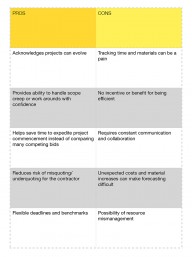
TIME AND MATERIALS
Time and materials is a standard phrase in a contract for construction, product development or any other piece of work in which the employer agrees to pay the contractor based upon the time spent by the contractor's employees and subcontractors to perform the work, and for materials used in the construction (plus the contractor's mark up on the materials used), no matter how much work is required to complete construction. ...

FrameWork 6/24
Ashley Culver on Leaking Logic
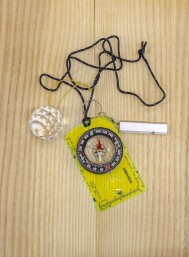
Ten Things that Make a House a Home
- Friends know where to drape their coats when visiting.
- Cooking eggs, I am familiar with how my body fits into the architecture so when I reach for a flipper to poke the yolk it is a dance of ease.
FrameWork 5/24
Blair Swann on Derek Sullivan
Drapery of seeds, furniture of husks,
the layers of knots – a library –
gathered at the pace of our walking.
This feeling – of being scattered –
holding a brittle fossil still of bark or bone –
a yet-upturned rock, waiting, sacred.
...

FrameWork 4/24
Ella Spitzer-Stephan on Plural
The definition of a mixture is;
a product of mixing: Combination: such as
A: a portion of matter consisting of two or more components in varying proportions that retain their own properties.
B: a fabric woven of variously colored threads.
...
FrameWork 3/24
Lodoe Laura on Zinnia Naqvi and Althea Thauberger
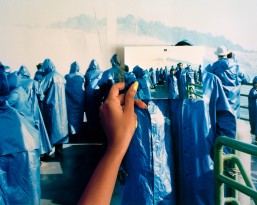
One of the first jobs I worked when I moved to Toronto was at the CN Tower. Ostensibly, I had moved to the city to go to University, but really, I mostly just wanted to leave the smaller city I came from, where the well-known joke was that everything shuts down at 6 pm – after the government workers went home. As a young adult living on my own, I was excited by the lights and buzz of the big city, and everything felt new. There was an energy about this place, and, to me, the CN Tower was the most recognizable symbol of the city. I felt excited to work at a place so impressive and iconic.
...
FrameWork 2/24
Yasmin Nurming-Por on Gareth Long
Notes on how to be alluring
A lenticular print is, at its most basic, a form of dense compression. With semi-circle lenses like serpentine undulations, light ricochets off their surfaces into the pupils of each viewer. No two people experience the identical image. Our eyes catch a flicker before it disperses and dissolves into another which can lead to a vicious cycle of chasing the original encounter. Taking form from material, Gareth’s watery lenticulars–of Fogo Island and the Delaware River–are visual phantoms.
...

FrameWork 12/23/2
Masi Oliveria on To pluck eternity ...
Here I am, deep in the cyber jungles of Google, stalking artists for Patrick Cruz’s group exhibit in Canada. I dive in and search the first name on the list, clicking through images like a woman possessed, reading texts with the enthusiasm of a caffeine-fueled detective hot on the trail of a crime scene, or I should say, art scene.
...
FrameWork 12/23/1
Bianca Weeko Martin on Patrick Cruz
Inn On The Park
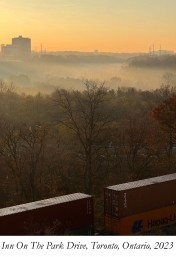
When my parents and I first immigrated to Canada, the first place we lived was a hotel called Inn On The Park: a soft landing on a small hill, on the threshold of Scarborough and Toronto. We stayed here for a few weeks before moving to an apartment at Kennedy and Eglinton. There is now a condo tower at the site of the now-demolished hotel, sharing the same address as that first “home” of ours: Inn On The Park Drive....
FrameWork 11/23
Ana Ghookassian on Kevin Yates
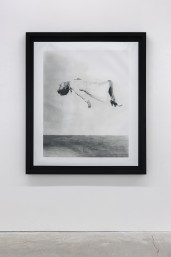
Walking through the front door at Susan Hobbs, I’m faced with an absence of colour, yet somehow presented with an abundance of life. The sizable figures, floating in their deserted Vantablack 3.0 worlds, though captured in a helpless state often with their eyes closed and palms open, are clearly still alive. Perhaps this is thanks to our shared contextual knowledge of the ‘Damsel in Distress’ tropes and our innate familiarity with that subtext from a once overused crescendo in pop-culture.
...

FrameWork 9/23/2
Weiyi Chang on Liz Magor
Eclipse
She left on a Tuesday. What was she wearing? It doesn’t really matter. It was raining. Plump, tired drops collided into the windows, cutting wide wet welts through the condensation. Water puddled on the ledge, seeping between the frame and the flaky paint. The house was poorly sealed. All manner of things managed to worm their way through the cracks.
FrameWork 9/23/1
Anna Daliza on Jeremy Laing
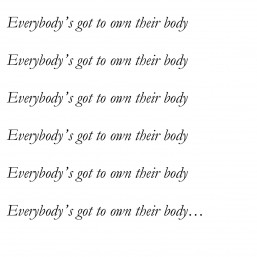
In the first known version of an unreleased song called My Forever by SOPHIE, the lyric, “Everybody’s got to own their body” repeats endlessly on top of a pulsing bass and ethereal synth rising with momentum, until the words lose their meaning, or transcend it. This phenomenon, when a word or phrase is repeated so many times its sound is divorced from its meaning, is called semantic satiation. Quite literally, the uncreation of meaning.
A Viewing Room v.4
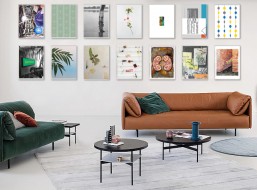
For our presentation at Art Toronto 2019, we collaborated with Klaus, on a continuation of our project series entitled A Viewing Room, in which we investigate the relationship between design and art; how design and domestic objects interact alongside artworks and how one can highlight the other. Please visit the website www.aviewingroomv4.com